
Filmywap
182 Hindi films from 2000 to 2015: multi-star comedies, love stories, films for children and small gems.

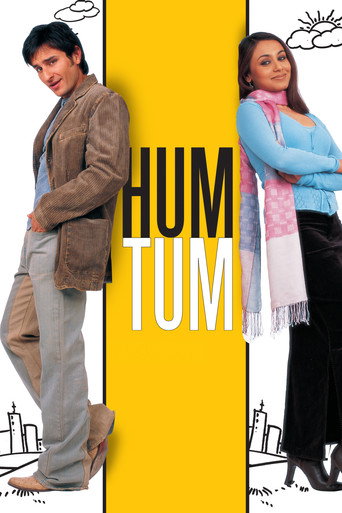
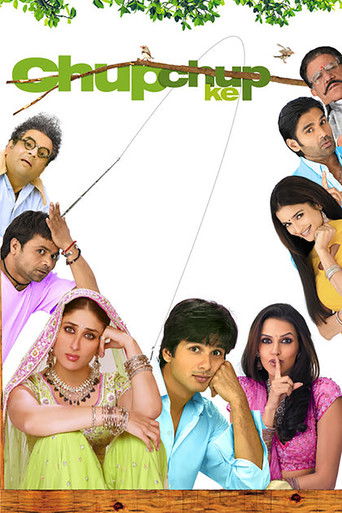
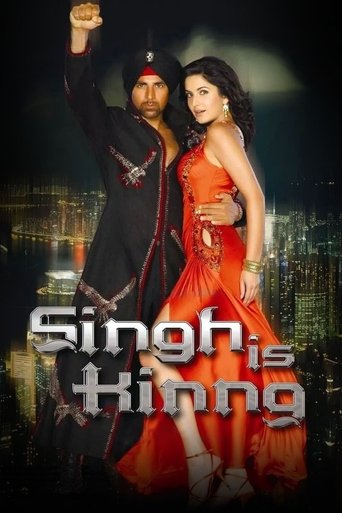
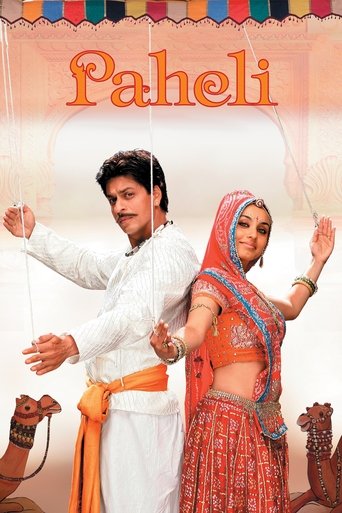

Filmywap: Bollywood films of 2000 to 2015 in English, from Phir Hera Pheri, Hum Tum, Guru and Dhamaal to Bheja Fry, Paheli, Paa and Do Dooni Chaar
The first fifteen years of this century were a busy and cheerful time for Hindi cinema. The multiplex arrived in Indian cities, with several small screens under one roof, and suddenly there was room for every kind of film: the star-filled comedy that played to packed houses, the glossy love story filmed in London or New York, the children's film with a friendly ghost, and the small, clever film made for very little money that people recommended to their friends. Filmywap is an English guide to those years: 182 Hindi films, released between 2000 and 2015, each with its own page, its story in English, its year, its running time and a Watch now button that leads to the official services carrying it in your country.
The catalogue has been chosen by hand for family viewing. The action films and thrillers of the period belong to other guides; Filmywap gathers the comedies, the romances, the films for children and the small gems, from Har Dil Jo Pyar Karega in 2000 to Welcome Back in 2015.
The sections below are a relaxed tour: how the site is laid out, the great comedy series, the star comedies, the love stories, the films for children, the small gems and a few plans for a first week. Each section links to a short help page, and the How to watch page sums up the simple steps from a category to the official service.
How Filmywap looks
Filmywap keeps the look of the site it is named after, which was built for the small screens of early mobile telephones, long before large displays were common. The whole site is a single narrow column on a plain white page. At the top is the logo, a small blue telephone with an orange play arrow beside the name in blue and orange, and under it a search box with a blue outline. A dark grey bar carries the menu: Home, Bollywood Movies, Comedy, Love Stories, For Children, the A to Z list, My List and Help. On a phone, the menu folds into a blue three-line button.
The home page begins, as the original did, with a grey bar reading Latest Update, and beneath it two short lists, the newest films under a green heading and the most watched under another, each title in red. Then come the main heading and a line about the catalogue inside a faint dotted frame.
The rest of the page is made of blue bars and lists. A blue bar with white lettering announces Movies categories, and under it each category has a row of its own: a bullet, the name in blue, the number of films in red and a dashed blue line beneath. Point at a row and it turns pale grey; that small effect, and the dashed lines, come directly from the original design. A second blue bar, whose title is underlined in orange, introduces the three groups by year. Further bars introduce three grids of posters, Most watched, Small gems and For children, each poster in a thin dashed frame, then the list of help pages and finally this guide. A grey bar with the copyright line closes the page.
The blue of the bars, the colour of the links, the dashed rules, the grey bars and the size of the lettering were measured from a saved copy of the original site from January 2016, which carried its whole style sheet inside the page. The typeface is the same family, and the page works with a keyboard, a screen reader and, of course, a small phone screen.
The great comedy series
Several of the best-loved comedy series in Hindi cinema were born or continued in these years, and the Comedy category, with 98 films, is the largest on the site. The Comedy help page gives a short selection, and the Sequels and series help page explains which film follows which.
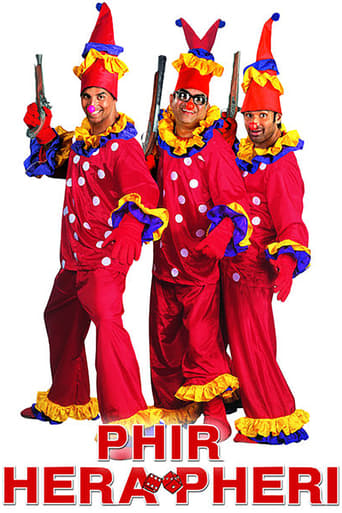
Phir Hera Pheri, from 2006, brings back three of the most famous characters in Indian comedy: Raju, the schemer, played by Akshay Kumar; Shyam, the worrier, played by Suniel Shetty; and Baburao, the short-sighted garage owner in thick spectacles, played by Paresh Rawal. Having become rich at the end of the first film, they are living in a mansion and doing as little as possible, until Raju hears of a scheme that promises to double their money in three weeks. It does the opposite, and the three are soon running from a growing crowd of people to whom they owe money. Baburao's lines are quoted across India to this day.
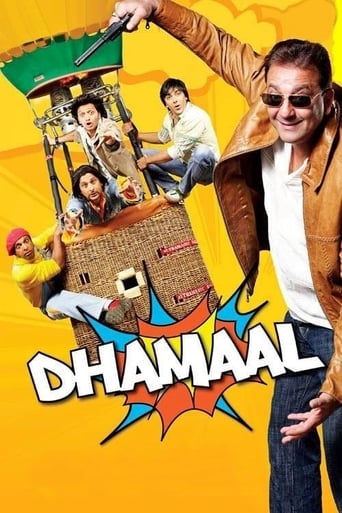
Dhamaal, from 2007, directed by Indra Kumar, started a series of its own. Four idle friends, played by Riteish Deshmukh, Arshad Warsi, Jaaved Jaaferi and Aashish Chaudhary, learn from a stranger of a fortune buried in a garden in Goa, under a big letter W, and race to reach it first, with a police inspector played by Sanjay Dutt close behind. The film sets romance aside altogether; it is one long chase, and Jaaved Jaaferi's innocent, childlike Manav is its comic heart.
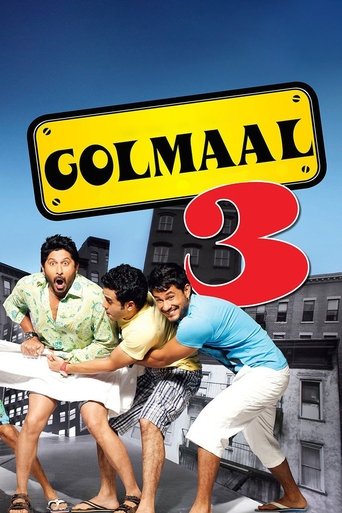
Golmaal 3, from 2010, directed by Rohit Shetty, is the third film of the most successful comedy series of the period. Two groups of quarrelsome young men, led by Ajay Devgn and Arshad Warsi, discover that the mother of one group and the father of the other, played by Ratna Pathak Shah and Mithun Chakraborty, were sweethearts long ago and have decided to marry at last, which makes the rivals into brothers under one roof. Kareena Kapoor, Tusshar Kapoor, Shreyas Talpade and Kunal Khemu complete the gang, and Johnny Lever appears as a crook with a very short memory.
Welcome Back, from 2015, directed by Anees Bazmee, reunites Uday and Majnu, two reformed strongmen played by Nana Patekar and Anil Kapoor, who have turned respectable and want only to find a suitable husband for their sister. Singh Is Kinng, from 2008, by the same director, stars Akshay Kumar as Happy Singh, a kind-hearted villager who causes chaos wherever he tries to help and is sent to Australia to bring home a wayward son of the village; Singh Is Bliing, from 2015, sends another cheerful Sikh hero to Goa. Awara Paagal Deewana, from 2002, is an early caper with Akshay Kumar, Suniel Shetty and Paresh Rawal, and Fool N Final, One Two Three, in which three men with the same name check into the same hotel, and Paying Guests follow in the same tradition.
A younger series arrived at the end of the period. Fukrey, from 2013, follows four young men in Delhi who need money, two of them to get into college: Hunny, who interprets the dreams of his friend Choocha to pick lottery numbers; Lali, who helps in his father's sweet shop; and Zafar, a musician. Their plan brings them to the door of a formidable local businesswoman, played by Richa Chadha. Varun Sharma's Choocha became an instant favourite, and the film has had two sequels.
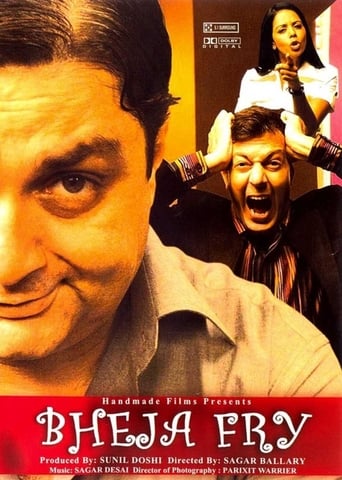
Bheja Fry, from 2007, is a comedy on a much smaller scale, and one of the surprises of the decade. Ranjeet, a smug music producer, hosts a weekly dinner to which each friend must bring the most foolish guest he can find. His choice is Bharat Bhushan, a tax inspector who loves to sing old film songs, played by Vinay Pathak; but Ranjeet hurts his back, the dinner is cancelled, and he is left alone for an evening with a guest who, with the best of intentions, takes his life apart. Made for a tiny sum, it ran for months, and Bheja Fry 2 followed in 2011.
Star comedies
The Star comedies category holds 36 films built around the big names of the time, and the Star comedies help page introduces them.
Priyadarshan, a director from Kerala, brought a special touch to Hindi comedy, with large casts, misunderstandings that grow by the minute and a soft heart beneath the noise. Chup Chup Ke, from 2006, stars Shahid Kapoor as a young man in debt who is fished out of the sea by two fishermen, played by Paresh Rawal and Rajpal Yadav, and pretends to be unable to hear or speak; he is taken into a large Gujarati household, where he meets a young woman, played by Kareena Kapoor, who is truly unable to speak. Yeh Teraa Ghar Yeh Meraa Ghar, from 2001, is a gentle comedy about a landlord, played by Suniel Shetty, who must sell his house to pay for his sisters' weddings, and a determined tenant, played by Mahima Chaudhry, who refuses to move out.
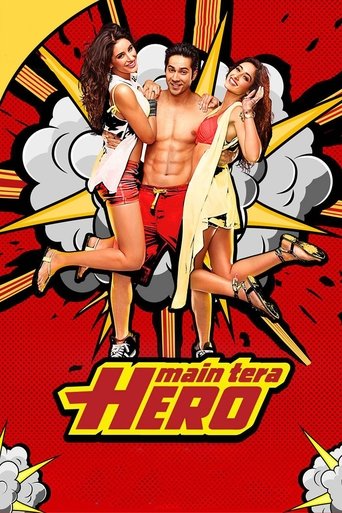
Govinda, the comedy king of the 1990s, appears in nine films here, among them Joru ka Ghulam, Akhiyon Se Goli Maare, Chalo Ishq Ladaaye, Raja Bhaiya and Albela. David Dhawan, his favourite director, is represented by Hum Kisi Se Kum Nahin, with Amitabh Bachchan, Sanjay Dutt, Ajay Devgn and Aishwarya Rai, and by Main Tera Hero, from 2014, which launched his son Varun Dhawan as a comic hero for a new generation.
Salman Khan stars in Ready, from 2011, as a carefree young man whose large family accidentally welcomes the wrong girl into the house, and in Main Aurr Mrs Khanna and Har Dil Jo Pyar Karega. Ajay Devgn, known as an action hero, proved a fine comedian in Golmaal 3 and in Son of Sardaar, from 2012, in which a man returns to his village in Punjab and finds himself the honoured guest of a family that has sworn to settle an old score with him as soon as he steps outside their door. Akshay Kumar's Khiladi 786 and Shahid Kapoor's Phata Poster Nikhla Hero, about a young man who wants to be a film star while his mother wants him to be a police officer, are in the same lively style.
Smaller comedies fill out the category. Pyare Mohan is about two friends, one blind and one deaf, who make a perfect team. Journey Bombay to Goa puts a crowd of comedians on one bus, Chala Mussaddi - Office Office, taken from a popular television series, sends a retired schoolteacher, played by Pankaj Kapur, through the maze of government offices to claim his pension, and Aloo Chaat, Teen Thay Bhai, Toh Baat Pakki! and Life Partner are comedies of family and marriage.
Love stories
The Love stories category holds 75 films, and the Love stories help page suggests where to begin.
Hum Tum, from 2004, directed by Kunal Kohli, is the romantic comedy that defined its decade. Karan, a cartoonist who believes that men and women are bound to misunderstand each other, and Rhea, who has little patience for him, meet on a flight from Delhi to New York and part on bad terms. Over the following nine years they keep meeting, in Paris, in Mumbai, at a wedding, each time a little older and wiser. Between the scenes, two cartoon characters named Hum and Tum, drawn by Karan, argue the matter out. Saif Ali Khan won the national award for best actor, and Rani Mukerji is his equal in every scene.
Ishq Vishk, from 2003, introduced Shahid Kapoor as a college boy who wants to be popular and takes too long to notice the friend who has always cared for him, played by Amrita Rao. Tujhe Meri Kasam, from the same year, introduced Riteish Deshmukh and Genelia D'Souza, who later married. Bachna Ae Haseeno, from 2008, follows a charming young man, played by Ranbir Kapoor, who looks back on the two women he once let down and sets out to ask their forgiveness before he can deserve the third. Break Ke Baad, with Imran Khan and Deepika Padukone, is about a couple who have been together since childhood and need some time apart.
The early years of the century were rich in sentimental romance, with songs that are still played at weddings. Tum Bin, from 2001, the first film of the director Anubhav Sinha, became a quiet success through its music. Dil Ka Rishta, with Arjun Rampal and Aishwarya Rai, Dil Hai Tumhaara, with Preity Zinta as a spirited younger sister, Yeh Raaste Hain Pyaar Ke, with Ajay Devgn, Madhuri Dixit and Preity Zinta, Na Tum Jaano Na Hum, in which Hrithik Roshan and Esha Deol fall in love by letter, Tera Jadoo Chal Gayaa, Hum Ho Gaye Aap Ke and Kitne Door Kitne Paas all belong to that warm tradition.
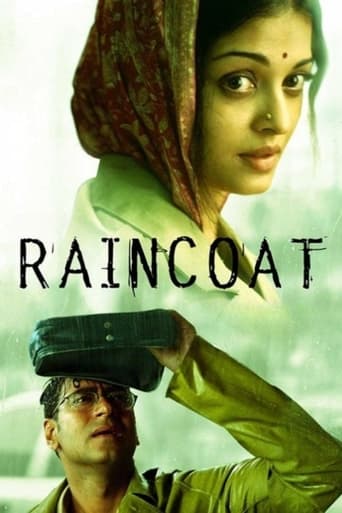
Raincoat, from 2004, directed by Rituparno Ghosh, is something rarer. On a rainy afternoon in Calcutta, a man who has lost his job, played by Ajay Devgn, visits the woman he once hoped to marry, played by Aishwarya Rai, in her dark and shuttered house. Each pretends to the other that life has been kind. Taken from a short story by O. Henry, it is almost a play for two voices, and it won the national award for the best Hindi film. Ahista Ahista, from 2006, with Abhay Deol and Soha Ali Khan, is another small and touching film, about a young man who earns his living as a witness at the marriage registry of old Delhi.
The later romances are lighter in tone. Daawat-e-Ishq, from 2014, is a story told through food, in which a young woman from Hyderabad and a chef from Lucknow, played by Parineeti Chopra and Aditya Roy Kapur, argue their way into love over plates of biryani and kebabs. Jhoom Barabar Jhoom, from 2007, begins with two strangers sharing a table at a London railway station and inventing grand love stories to impress each other. Katti Batti, Happy Ending, Ishkq in Paris, Nautanki Saala!, set in a Mumbai theatre, Mujhse Fraaandship Karoge, about a romance that begins with borrowed identities online, and Luv Shuv Tey Chicken Khurana, about a family restaurant in Punjab and a lost recipe, are all good company.
Two comedies about young men and their girlfriends found a large audience among students. Pyaar Ka Punchnama, from 2011, follows three flatmates in Delhi through the ups and downs of first love, and is remembered for a long, breathless speech by one of them, delivered by a newcomer named Kartik Aaryan; Pyaar Ka Punchnama 2 repeated the formula in 2015. Yaariyan, Lekar Hum Deewana Dil, Luv Ka The End and Kal Kissne Dekha are college romances of the same years.
For children
Hindi cinema made a real effort for its youngest viewers in this period, and the For children category holds 36 films. The For children help page picks out the best, and the Ghosts and magic help page gathers the fantasies.
Bhoothnath, from 2008, is the favourite. Banku, a seven-year-old boy played by Aman Siddiqui, moves with his parents into an old house in Goa that is said to be haunted. It is: the ghost of the former owner, a grumpy old man played by Amitabh Bachchan, does his best to scare the family away. But Banku is afraid of very little, and decides that the ghost is an angel; before long the two are firm friends, and the boy helps the old man to settle the sadness that keeps him in the house. Juhi Chawla plays the mother, and Shah Rukh Khan appears as the father.
Paheli, from 2005, directed by Amol Palekar, is a fairy tale for all ages, taken from a folk story of Rajasthan. A merchant's son leaves on business the morning after his wedding, to be away for five years; a spirit who has fallen in love with the bride takes the husband's shape and comes to live with her, and she, knowing the truth, lets him stay. Shah Rukh Khan plays both husband and spirit, Rani Mukerji the bride, and the desert colours, the puppets who narrate the tale and the music make it one of the most beautiful films of the decade. It was India's entry for the Academy Awards.
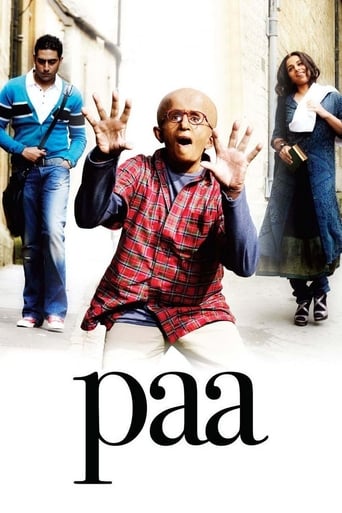
Paa, from 2009, directed by R. Balki, turns a family upside down in an unusual way. Auro is a clever, funny twelve-year-old with a rare condition that makes his body age very fast; he is played, under hours of make-up, by Amitabh Bachchan, while Abhishek Bachchan, the star's own son, plays the boy's father, a young politician, and Vidya Balan plays his mother, a doctor. The film is full of humour, and it brought Amitabh Bachchan the national award for best actor.
Real children with real dreams are the subject of some of the finest films in the category. I Am Kalam, from 2011, directed by Nila Madhab Panda, follows Chhotu, a bright boy who works at a roadside tea stall in Rajasthan, sees President Kalam on television and decides to rename himself Kalam and to study. Gattu, from 2012, is set in a town where every child flies kites, and where a street boy slips into a school to reach the one roof high enough to defeat the mysterious black kite that rules the sky. Tahaan, from 2008, directed by Santosh Sivan, follows an eight-year-old in Kashmir who sets out across the mountains to get back his pet donkey, and Jalpari follows a girl from the city on her first visit to her father's village.
Ferrari Ki Sawaari, from 2012, is a warm comedy about Rusy, an honest clerk who will do anything to send his cricket-loving son to a training camp at Lord's, and who ends up borrowing, rather quietly, a red Ferrari that belongs to a very famous cricketer. Sharman Joshi and Boman Irani play father and grandfather. Chain Kulii Ki Main Kulii is about an orphan who believes that his battered bat once belonged to a cricket legend, and Nanhe Jaisalmer: A Dream Come True is about a ten-year-old camel driver in the desert who is certain that a film star is his friend.
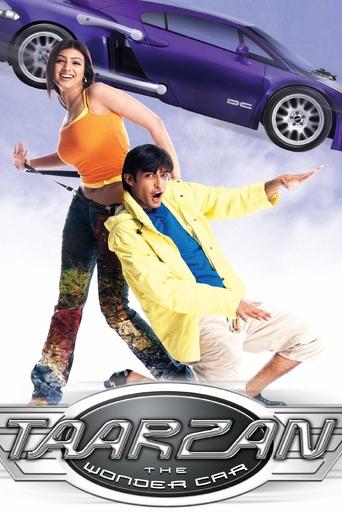
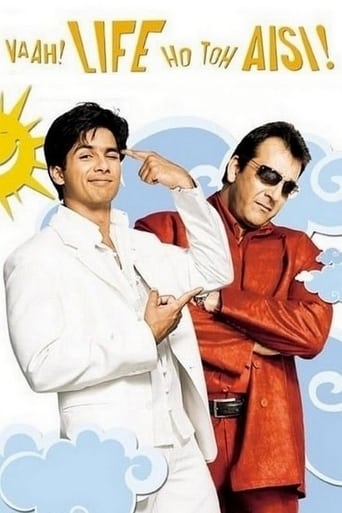
For fantasy, there are Taarzan: The Wonder Car, in which a young designer rebuilds his late father's car and finds that it has a will of its own; Zokkomon, a superhero story from Disney's Indian studio with Darsheel Safary; Gayab, about a shy young man who becomes invisible; Hari Puttar, about a boy left at home who must outwit two bungling burglars; Aao Wish Karein, about a boy whose wish to be grown up is granted; Bhoot Unkle and Hum Tum Aur Ghost; and Vaah! Life Ho Toh Aisi!, in which a young man is given a second chance to look after his family. Jumbo, an animated film about a young elephant, My Friend Ganesha and Hamara Hero Shaktimaan, with the television superhero, are for the very young.
Growing up is the subject of Gippi, about a fourteen-year-old girl in Shimla who learns to like herself, Bubble Gum, about a boy in the steel town of Jamshedpur in the 1980s, Kaccha Limboo, about a schoolboy who feels out of place, and Rok Sako To Rok Lo, about a school sports contest between two very different schools.
Small gems
The multiplex made room for a new kind of film: small in budget, free of big stars, and dependent on good writing and word of mouth. The Small gems category holds 52 of them, and the Small gems help page offers a short list to start with.
Do Dooni Chaar, from 2010, the first film of the director Habib Faisal, is the story of the Duggals of Delhi. Santosh Duggal is a mathematics teacher who rides an old scooter, gives private lessons in the evening and counts every rupee; his wife and two teenage children think it is high time the family owned a car. The film follows their attempt to buy one in time for a wedding, and the temptation that comes Mr Duggal's way. Rishi Kapoor and Neetu Singh, a famous screen couple of the 1970s and husband and wife in real life, returned to the screen together for it, and the film won the national award for the best Hindi film.
Shyam Benegal, the veteran of the serious cinema, made two films in this period that belong here. Zubeidaa, from 2001, written by Khalid Mohamed about his own mother, tells of a spirited young woman of the 1950s, played by Karisma Kapoor, who becomes the second wife of a prince; Rekha and Manoj Bajpayee complete the cast, and the music is by A. R. Rahman. Well Done Abba, from 2010, is a comedy: a driver, played by Boman Irani, applies for a government grant to dig a well in his village, finds that everyone along the way has taken a share, and reports to the police that his well has been stolen.
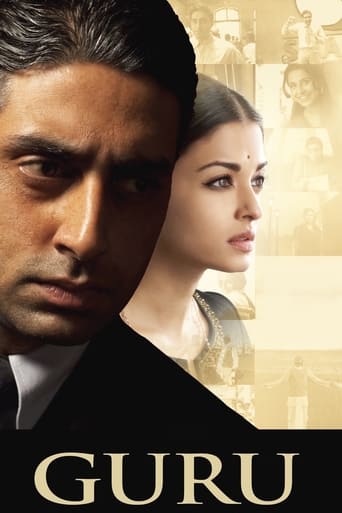
Guru, from 2007, directed by Mani Ratnam, is a small gem only in spirit, for it is a large and handsome film. Gurukant Desai, the son of a village schoolmaster, played by Abhishek Bachchan, goes to Turkey as a young man, returns to Bombay with a little money and an enormous ambition, and builds one of the greatest companies in India, bending a good many rules on the way. Aishwarya Rai plays his wife and partner, Mithun Chakraborty the newspaper owner who is both his friend and his critic, and the songs by A. R. Rahman are among the composer's best.
Several films look at ordinary people and the state with a smile. In Zed Plus, from 2014, a man who mends punctures in a small town of Rajasthan meets the prime minister by chance, and through a misunderstanding of language is given the highest level of official protection, with a squad of commandos following him to his shop. Gour Hari Dastaan, from 2015, tells the true story of an old man in Mumbai, played by Vinay Pathak, who spent decades asking for the certificate that would recognise his part in the freedom movement. Ekkees Toppon Ki Salaami follows two sons who are determined to give their honest father the public honour he deserved, Kaun Kitney Paani Mein is a satire about a village with water and a village in need of it, and Yeh Hai Bakrapur is about a family and its goat.
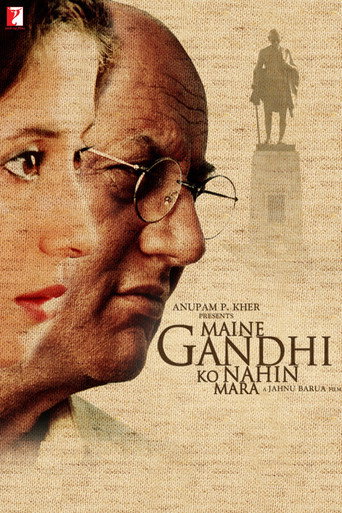
The decade's quiet dramas are gathered on the Quiet dramas help page. Maine Gandhi Ko Nahin Mara, from 2005, stars Anupam Kher as a retired professor whose memory is failing and Urmila Matondkar as the daughter who looks after him. Road to Sangam, from 2010, stars Paresh Rawal as a devout mechanic in Allahabad who is asked to repair the engine of an old lorry and learns that it once carried the ashes of Mahatma Gandhi. Dhoop, from 2003, stars Om Puri as a father who must fight the bureaucracy to open the petrol station granted in memory of his son, an army officer. Tehzeeb, with Shabana Azmi as a famous singer and Urmila Matondkar as her daughter, Listen... Amaya, which reunited Farooq Shaikh and Deepti Naval after many years, and Phir Milenge, directed by Revathi, with Shilpa Shetty as a woman who goes to court to keep her job after an illness, are all acted with great feeling.
Some small films are simply charming. Patang, from 2011, is set in the old city of Ahmedabad during the great kite festival, when every rooftop is crowded and a family meets after years apart; it was filmed with the people of the neighbourhood and is a joy to look at. Aashayein, from 2010, directed by Nagesh Kukunoor, follows a gambler, played by John Abraham, who finds unexpected friends. The President Is Coming, from 2009, is a mock documentary about six young Indians competing for the honour of shaking the hand of a visiting American president, and Kuchh Meetha Ho Jaye strands a crowd of travellers at a tiny airport for a day.
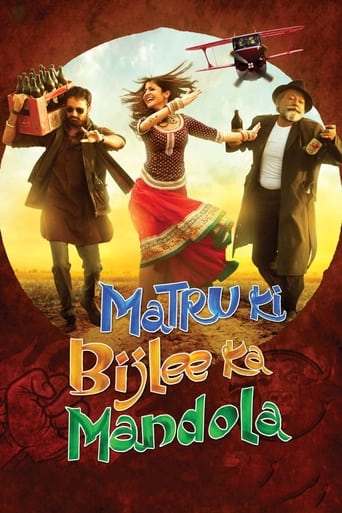
The category also holds Matru Ki Bijlee Ka Mandola, from 2013, Vishal Bhardwaj's comic fable about a rich landowner in Haryana, played by Pankaj Kapur, who is a hard man by day and a friend of the farmers by night, and who keeps seeing a pink buffalo; My Friend Pinto, about an innocent young man loose in Mumbai on New Year's Eve; Fatso!, a comedy about a mix-up in the afterlife; Aagey Se Right, about a policeman who loses his pistol; and Anwar Ka Ajab Kissa, with Nawazuddin Siddiqui as a private detective in Kolkata who takes his dog on every case.
Players and performers
Cricket and the film world are the two great passions of India, and the Players and performers category holds 22 films about both. The Players and performers help page describes them.
Dil Bole Hadippa!, from 2009, stars Rani Mukerji as Veera, a village girl in Punjab who can hit a cricket ball harder than any man in the district and is refused a trial for the local team because she is a woman. So she puts on a turban and a false beard and returns as Veer, and the team's captain, played by Shahid Kapoor, is delighted with his new batsman. Victory, from 2009, follows a young man from Jaisalmer who is chosen for India, loses his way and must earn his place again, with dozens of real international cricketers appearing as themselves. Hattrick tells three stories set during a World Cup, Say Salaam India: 'Let's Bring the Cup Home' follows a coach and a team of schoolboys from a modest school, and Miley Naa Miley Hum is about a tennis player with two very different parents. Aryan: Unbreakable is the story of a college boxing champion who gives up the ring for his family and finds his way back.
The film world looks at itself in several comedies. Main Madhuri Dixit Banna Chahti Hoon, from 2003, follows Chutki, a village girl who dances like her idol and persuades her new husband to take her to Mumbai so that she can become a star; Antara Mali and Rajpal Yadav are a touching pair. In Chintu Ji, from 2009, Rishi Kapoor plays a vain film star named Rishi Kapoor who comes to the small town where he was born in the hope of entering politics. Film Star follows an actress whose fame is fading, Naach follows a choreographer and an actor who fall in love and disagree about art, and Super Star is about a struggling actor who looks exactly like a famous producer's son.
Music and dance complete the category: Shakalaka Boom Boom, about two rival musicians in New York, Dil Vil Pyar Vyar, a musical built on the songs of R. D. Burman, Jhoom Barabar Jhoom, with its dance contest in London, and Yaariyan, in which students must win a contest to save their college.
Actors to follow
The Actors to follow help page suggests exploring the catalogue through its faces. Paresh Rawal, who appears in eight films, is perhaps the finest comic actor of his generation; see him as Baburao in Phir Hera Pheri, as the fisherman in Chup Chup Ke and, in a serious part, in Road to Sangam. Anupam Kher appears in ten, from Maine Gandhi Ko Nahin Mara to Ekkees Toppon Ki Salaami. Boman Irani, who came to films in his forties, is in Well Done Abba, Ferrari Ki Sawaari and Shirin Farhad Ki Toh Nikal Padi, a late-blooming romance between two middle-aged members of the Parsi community, with Farah Khan.
Vinay Pathak, after Bheja Fry, became the face of the small film, in Gour Hari Dastaan, Kaagaz Ke Fools and others. Abhishek Bachchan has seven films here, including Guru, Paa, Jhoom Barabar Jhoom, Tera Jadoo Chal Gayaa and Shararat, in which a spoilt young man is sent to do community service in a home for the elderly. Shahid Kapoor has six, from Ishq Vishk to Phata Poster Nikhla Hero, and Ayesha Takia, who began in Taarzan: The Wonder Car, also has six.
Among the actresses, Rani Mukerji is at her best in Hum Tum, Paheli and Dil Bole Hadippa!; Preity Zinta in Dil Hai Tumhaara, Har Dil Jo Pyar Karega and Ishkq in Paris; Aishwarya Rai in Guru, Raincoat and Dil Ka Rishta; and Vidya Balan in Paa and in Bobby Jasoos, from 2014, in which she plays a young woman of old Hyderabad who is determined to become the best private detective in the city, and tries a dozen disguises on the way.
Families and friends
Family comedies and dramas run through every category. Tera Mera Saath Rahen, from 2001, stars Ajay Devgn as a man who has devoted his life to caring for his younger brother and must decide whether there is room in it for a wife. Isi Life Mein, from the Rajshri company, follows a girl from a traditional home in Ajmer who discovers the theatre at a college in Mumbai. Tell Me O Kkhuda, directed by Hema Malini with her daughter Esha Deol in the lead, follows a young woman who learns that she was adopted and travels across India to find her father, meeting three possible candidates played by Dharmendra, Rishi Kapoor and Vinod Khanna.
Sadiyaan: Boundaries Divide... Love Unites, from 2010, with Rekha, Hema Malini and Rishi Kapoor, is the story of a child raised by one family and returned, years later, to another across a border. Dil Jo Bhi Kahey..., with Amitabh Bachchan, is set among Indian families in Mauritius, Ramji Londonwaley sends a village cook from Bihar, played by Madhavan, to England, and Home Delivery, a comedy set on the night before Diwali, follows a newspaper columnist, a film star and a pizza delivery man, played by Boman Irani, whose order changes the evening.
Friendship is celebrated in De Taali, about three friends who have shared everything since childhood, Sorry Bhai, about two brothers and a wedding in Mauritius, One by Two, about two strangers in Mumbai whose lives run side by side, and Mumbai Delhi Mumbai, about a girl from one city spending a single day in the other. Jugaad, with Manoj Bajpayee, is about the owner of an advertising agency who wakes up to find his office sealed, and Gafla, from 2006, follows an ambitious young man into the stock market of the early 1990s.
Year by year
Three categories arrange the catalogue by date, and the Year by year help page describes them. The 2000 to 2005 category holds 56 films. These were the years of the family romance, of music that sold in millions on compact discs, and of the last great run of Govinda comedies; Har Dil Jo Pyar Karega, Zubeidaa, Tum Bin, Awara Paagal Deewana, Ishq Vishk, Hum Tum, Raincoat, Taarzan: The Wonder Car and Paheli all belong to them.
The 2006 to 2010 category holds 63 films. The comedy series were at their height, with Phir Hera Pheri, Chup Chup Ke, Dhamaal, Singh Is Kinng and Golmaal 3, and the small film found its feet, with Bheja Fry, Aashayein, Do Dooni Chaar and Well Done Abba. Guru, Bhoothnath, Bachna Ae Haseeno and Paa were among the big successes.
The 2011 to 2015 category also holds 63 films. A new generation of actors and directors arrived, and stories moved from foreign cities back to the towns of India: I Am Kalam, Pyaar Ka Punchnama, Ferrari Ki Sawaari, Fukrey, Matru Ki Bijlee Ka Mandola, Bobby Jasoos, Daawat-e-Ishq, Zed Plus and Welcome Back show the range.
The highest rated
The Top rated category gathers the 20 films with the highest ratings from viewers around the world, and the Top rated help page explains how it works. Guru, Hum Tum, Bheja Fry, Do Dooni Chaar, Paa, Raincoat, I Am Kalam and Phir Hera Pheri are among its regular members. Ratings favour drama over farce, so some of the funniest films on the site sit lower than they deserve; the Most watched grid on the home page is a useful second opinion.
Finding a film
There are several ways to find a film on Filmywap, and the Finding titles help page describes each one. The search box under the logo accepts a title, in Hindi or in English, and shows matching films as you type. The A to Z page lists all 182 films in alphabetical order, the Bollywood Movies page lists them by popularity, and the home page lists eight categories and three groups by year, each with its number of films.
Hindi film titles of this period are famous for their creative spelling, with doubled letters added for luck, so Main Aurr Mrs Khanna, Mujhse Fraaandship Karoge, Kehtaa Hai Dil Baar Baar and Yeh Teraa Ghar Yeh Meraa Ghar are spelt exactly as their makers wished. If a search finds too little, type a shorter part of the name. Old titles are often reused as well: Jhoom Barabar Jhoom and Hum Kisi Se Kum Nahin take their names from famous songs and films of the 1970s, and the year on each page will tell you which film you have found.
What a title page shows
Every film has a page of its own. At the top are the poster, the title, the original Hindi title, the year, the running time and the rating from viewers around the world. Below come the story in English, the genres, the director and the leading actors, and a row of related films from the same categories. The Watch now button opens a list of the official services that carry the film in your country, with a note of whether each one offers it to subscribers, free with advertisements, or to rent or buy.
Films of 2000 to 2015 are widely available. The larger subscription services hold many of them, the music companies and studios that own them show a good number free of charge on their official channels, and most services provide English subtitles. Availability differs from country to country and changes from month to month, so the list on each title page is the best place to look.
A film can be kept for another day with the Add to My List button on its page. The list lives in the browser of the device you are using, asks for neither a name nor a password, and is reached through the My List link in the grey menu bar. The My List help page shows how to review it, how to remove a film and how to copy the list to another device.
A first week
For a newcomer, here are seven evenings. On the first, laugh with Phir Hera Pheri. On the second, enjoy the long courtship of Hum Tum. On the third, gather the children for Bhoothnath. On the fourth, discover Bheja Fry, and on the fifth, Do Dooni Chaar. On the sixth, watch Guru for its story and its songs, and on the seventh, finish with the fairy tale of Paheli.
A second week is easy to plan: Dhamaal, Chup Chup Ke, Paa, Ferrari Ki Sawaari, Raincoat, Well Done Abba and Fukrey. A third might follow one theme, such as cricket, with Dil Bole Hadippa!, Victory and Chain Kulii Ki Main Kulii, or childhood, with I Am Kalam, Gattu and Tahaan. For an evening of pure nonsense, Golmaal 3, Singh Is Kinng and Welcome Back will do nicely.
The music of the period
The songs of these years deserve a paragraph of their own, since for many viewers they are the strongest memory of the films. A. R. Rahman wrote the scores of Guru and Zubeidaa; the trio Shankar, Ehsaan and Loy wrote Jhoom Barabar Jhoom and many of the urban romances; Pritam wrote the dance numbers of Golmaal 3, Ready and Singh Is Kinng; Jatin and Lalit wrote Hum Tum; and Nadeem and Shravan, Anu Malik and Himesh Reshammiya supplied the love songs of the early years. The singers Sonu Nigam, Shreya Ghoshal, Sunidhi Chauhan, Udit Narayan, Alka Yagnik, Shaan and K.K. are heard throughout, and M. M. Kreem's songs for Paheli and Amit Trivedi's for Luv Shuv Tey Chicken Khurana are small treasures.
Directors to know
A few directors shaped the period, and their names are a useful guide. Priyadarshan and Anees Bazmee were the masters of the crowded comedy; Indra Kumar and Rohit Shetty built the Dhamaal and Golmaal series; David Dhawan carried his 1990s style into the new century. Among the makers of romance, Kunal Kohli made Hum Tum, Siddharth Anand made Bachna Ae Haseeno, and Habib Faisal, after Do Dooni Chaar, made Daawat-e-Ishq.
The small film had its own champions. Sagar Ballary made Bheja Fry, its sequel and Kaccha Limboo; Nila Madhab Panda made I Am Kalam, Jalpari and Kaun Kitney Paani Mein, all three about children or villages and the larger world; Nagesh Kukunoor made Aashayein; and Rajat Kapoor, an actor in many of these films, directed Fatso!. Veterans were active too: Shyam Benegal with Zubeidaa and Well Done Abba, Mani Ratnam with Guru, Amol Palekar with Paheli, Vishal Bhardwaj with Matru Ki Bijlee Ka Mandola, and the painter M. F. Husain with Meenaxi: Tale of 3 Cities, a film that looks like a moving canvas.
How the catalogue is kept
Filmywap is put together by people who watch and read about every film they list. Before a title is added, its story, its certificate and its reviews are checked, and films that are too rough for a family evening are set aside for other guides. The summaries are written in simple English, the years and running times are checked against the public film databases, and the posters are the official ones. The categories, the counts beside them and the Latest Update lists are refreshed together with the catalogue.
Filmywap is a guide and holds neither films nor downloads. Each Watch now button opens an official, licensed service, so the people who made a film are paid when you watch it.
Questions and answers
Questions
What is Filmywap?
Filmywap is an English guide to 182 Hindi films released between 2000 and 2015. Each film has a page with its story, year, running time, director and cast, and a Watch now button that leads to the official services carrying it in your country.
Which films should I watch first?
Start with Phir Hera Pheri, Hum Tum, Bhoothnath, Bheja Fry, Do Dooni Chaar, Guru and Paheli. The first-week plan in the guide suggests many more.
Is the catalogue suitable for families?
Yes. Every film is chosen by hand for a family audience, with an emphasis on comedies, love stories, films for children and small, gentle dramas.
Which films are best for children?
The For children category holds 36 films, among them Bhoothnath, I Am Kalam, Gattu, Ferrari Ki Sawaari and Taarzan: The Wonder Car.
Are the films subtitled in English?
Most official services offer English subtitles for Hindi films of this period. The services listed on each title page show the languages they provide.
Why does the site look like a mobile page?
The design follows the original site, which was made for the small screens of early mobile telephones: one narrow column of blue bars and simple lists. It is quick to load and easy to read on any device.
How does My List work?
Press Add to My List on the page of any film. The list is stored in the browser of your device, free of charge, and the My List link in the menu bar opens it.
Does Filmywap host films or downloads?
Filmywap is a guide only. Every Watch now button leads to an official, licensed service.
